I stopped saying “you go ahead.”
The stiffness wasn’t in my joints. It was deeper.


It doesn't just hurt. It makes you sit things out.
It starts small. Then one day you realize you've been saying "you go ahead" for months.
Your hip feels tight. You tell yourself you'll go tomorrow. Tomorrow comes and you say it again.
The hike. The garden. The weekend trip. Not because you don't want to — because you're not sure your body will let you.
Your daughter asks if you want to hold the baby. You pause. That pause is the cost.
The heat wrap feels nice tonight. But the stiffness is back by morning. Because warmth on the surface doesn't reach the tight tissue underneath.
The real problem isn't the joint. It's the muscle and fascia around the joint — stuck, dehydrated, and never properly worked.
It started in your mid-40s. Maybe earlier.

One morning your shoulder wouldn't move the way it used to. Then your hip. Then your hands.
You went to your doctor. They scanned the joint. They checked the bone. They said: "Nothing is wrong."
And you went home wondering if you were imagining it.
You were not imagining it.
Your estrogen dropped. Your tissue changed first.

Most women never connect their stiffness to their hormones.
Perimenopause can start in your mid-40s. Years before your periods stop. Long before anyone says the word to you.
Estrogen helps keep muscle flexible, fascia supple, and your pain threshold steady. When it declines, three things happen:
The tissue wrapping your joints stiffens. It loses moisture. It becomes tight and sticky.
The layers stop moving. Instead of gliding, they bind. That's the locked-up morning feeling.
Pain sensitivity rises. Same body. But now everything feels sharper and harder to ignore.
In 2024, it got a name.

Dr. Vonda Wright, orthopedic surgeon at the University of Central Florida, published a paper in Climacteric that named what you've been feeling:
The Musculoskeletal Syndrome of Menopause.
Four out of ten. Scanned. Checked. Sent home. That's not a personal failing. It's a pattern.
The tools weren’t wrong. They were working the wrong layer.

Warms the surface. The stuck tissue underneath stays stuck.
Pushes down. Tight fascia needs lifting and separating.
Buzz the signal. The tissue still isn’t being worked.
Quiet the pain. When they wear off, the stiffness is still there.
Different tools. Same problem.
They treated the feeling — not the stuck tissue around the joint.
Massage is the best thing for it. But you can't get one at 10pm on a Tuesday.

When your body locks up after a long day, you can't just book a massage. Your next one is twelve days away.
So you reach for the heat wrap. It's warm. It feels good. And the moment you take it off, the stiffness is right back where it was.
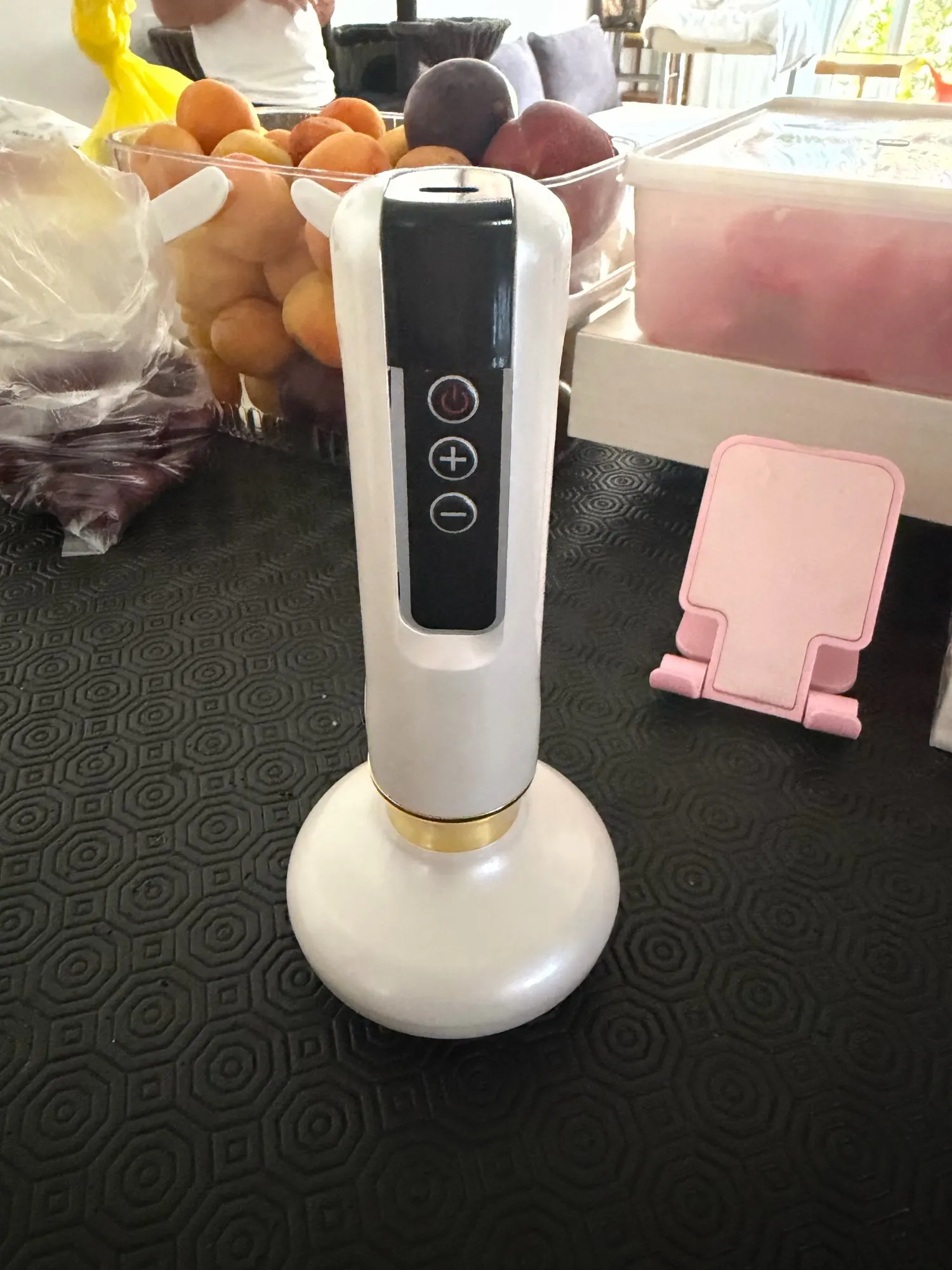
MyoRitual was built to close that gap — by a kinesiologist, not a marketing team.
Five modes. The same sequence a therapist follows:


MyoRitual™
5-in-1 recovery tool for stiffness and pain.
Built for the tight muscle and fascia around your joints.
Free Recovery Protocol Included
Couldn't load pickup availability
Myoritual Recovery Tool

I expected vibration, but this felt completely different. The suction and warmth made it feel like the tight area was actually being worked, not just hit.
How does it work and why
How does it work and why
Your stiffness usually isn't about the joint. It's about the fascia — the connective tissue wrapped around the joint — becoming dehydrated, stiff, and stuck.
When fascia layers adhere to each other, movement becomes restricted. That's the "locked up" feeling. The scan looks normal because the bone is fine. The tissue around it isn't.
Heat wraps warm the surface, but joints have limited blood vessel circulation — the heat barely reaches the stuck fascia underneath. Massage guns hammer the tissue further together. TENS units buzz the surface nerves. None of them separate the layers.
MyoRitual combines five tissue-working modes: heat to prepare the tissue, a working edge to move over tight fascia, dynamic suction to physically lift and separate the stuck layers (allowing circulation and hydration to return), EMS to stimulate deep muscle, and red light to support recovery.
One tool. Five approaches. The same multi-step principle a skilled massage therapist uses — at home, on yourself, in 10 minutes.
MyoRitual is a recovery tool, not a medical device. It does not diagnose, treat, cure, or prevent any condition.
Is it safe?
Is it safe?
Each of the five modalities has been used individually by massage therapists, physical therapists, and sports clinics for years. MyoRitual brings them together with fully adjustable intensity on every mode.
Start low. Let the heat prepare the area first. Some temporary redness from suction is normal and typically fades within minutes.
Do not use if you have a pacemaker, implanted electronic device, are pregnant, or have blood-clotting issues. Avoid open wounds, injured skin, and the front of the neck. When in doubt, ask your doctor.
Intended for external use on intact skin only. Not a substitute for professional medical care.
Skeptical? You Should Be.
Skeptical? You Should Be.
You've bought devices before. The massage gun that bruised you. The TENS unit with pads that fell off. The heat wrap that stopped working the moment you took it off.
Those were single-mode tools. They all addressed one layer and left the stuck fascia untouched.
MyoRitual is the first handheld device that lifts and separates the tissue layers with suction — the one thing percussion, heat, and electrical pads physically cannot do. Built by a kinesiologist who works the tissue every day. Not repackaged from a beauty gadget.
If it ends up in the drawer — 30-Day Comfort Guarantee. Full refund.
Results vary by individual. MyoRitual is a personal recovery tool.
Money Back Guarantee
Money Back Guarantee
Use MyoRitual for 30 days. If you're still saying "you go ahead" after a month, we refund you. No hassle.
Applies to first purchase. See full return policy for terms.
Shipping Info.
Shipping Info.
Shipping is free on every U.S. order.
Orders are prepared within 1–3 business days. Once your order ships, you’ll receive a tracking number by email.
Delivery normally takes 6–10 business days after dispatch.



Less than you’re already spending
The real cost of “just managing it”
Massage appointments
$100–$140 per session
- Helpful when you can book it
- Relief between appointments varies
- Not there when stiffness shows up at night
Massage guns
$50–$200 per device
- Can feel aggressive
- Hard to use on neck, shoulder, and mid-back
- Pushes down instead of lifting tissue
Heat + TENS
$25–$120 per tool
- Heat only warms
- TENS can feel confusing
- Pads, wires, and one-mode relief
MyoRitual™
$59.99 one-time
- 5 tissue-working modes
- Heat, glide, suction, EMS, and red light
- Built for self-use
- 10 minutes at home
- 30-Day Comfort Guarantee
COMMON QUESTIONS
I've bought devices before. They all ended up in a drawer.
I've bought devices before. They all ended up in a drawer.
Because they all addressed one layer. The heat wrap warmed the surface. The massage gun hammered it. The TENS unit buzzed it. None of them separated the stuck fascia layers around the joint — which is the actual source of the restriction. MyoRitual is the first handheld tool that uses suction to physically lift and separate the tissue — the one thing compression, percussion, and surface heat cannot do. And if it still ends up in the drawer, the 30-Day Comfort Guarantee means you get your money back.
MyoRitual is a recovery tool, not a medical device. Results vary.
Will this work for neck pain?
Will this work for neck pain?
Yes — but probably not the way you think.
Most neck stiffness doesn't start in the neck. It starts in the tight muscle and fascia around it — your traps, your shoulders, your upper chest.
When those areas are stuck and restricted, they pull on the neck from every direction. That's why rubbing your neck directly never holds.
MyoRitual is designed to work the tissue around the problem — traps, shoulders, chest, upper back. When those layers release, the neck benefits.
It's the same approach a kinesiologist would take. Work what's pulling. The neck follows.
MyoRitual is a recovery tool that supports muscle and joint comfort. It does not treat or diagnose any medical condition. If you have persistent neck pain, consult your healthcare provider.
Is it safe?
Is it safe?
Each of the five modalities in MyoRitual — heat, gua sha-style tissue work, cupping-style suction, EMS, and red light — has been used individually by massage therapists, physical therapists, and sports clinics for years. MyoRitual brings them together in one at-home tool with adjustable intensity on every mode.
Start on the lowest setting and increase gradually.
Do not use MyoRitual if you: have a pacemaker or implanted electronic device, are pregnant, have blood-clotting issues, or have a condition your doctor has told you limits the use of heat, electrical stimulation, or massage.
Avoid using on: injured skin, open wounds, irritated areas, the front of the neck, the face, the spine directly, or any area that feels sharp, numb, or inflamed.
When in doubt, ask your doctor first.
How long does a session take?
How long does a session take?
10 minutes per area. That's it.
Most women use it as a short evening ritual — before bed, on the couch, after a long day. The warmth and the tissue work tend to feel good enough that it becomes something you look forward to, not something you have to force yourself to do.
More is not better. Slow, consistent sessions work better than long, intense ones.
How often should I use it?
How often should I use it?
For everyday stiffness, most women prefer short, gentle sessions several times a week over long, intense sessions once in a while. Consistency matters more than intensity.
Some women use it daily. Some use it whenever the stiffness flares. There's no single right frequency — just what works for your body.
I'm worried it will hurt. The massage gun bruised me.
I'm worried it will hurt. The massage gun bruised me.
No percussion. No hammering. MyoRitual uses suction — which lifts the tissue instead of pounding it down. Start on the lowest setting. Let the heat prepare the area first. You should feel the tissue being worked, but never sharp pain. Some temporary redness from suction is normal and fades within minutes.
If discomfort persists, discontinue use and consult a healthcare professional.
This looks like one of those anti-cellulite device
This looks like one of those anti-cellulite device
Other devices that look similar are sold for sculpting and cellulite. This is not that. MyoRitual is a recovery tool — designed by a kinesiologist for tight muscle and fascia around painful joints. Different positioning, different settings, different purpose. If you're in pain and looking for something that works the tissue, you're in the right place.
MyoRitual is positioned as a recovery and comfort tool, not a cosmetic device.
How is this different from a massage gun?"
How is this different from a massage gun?"
A massage gun does one thing: percussion. It pushes down into the tissue with rapid impact. For some areas and some people, that works. But for a lot of women — especially women dealing with stiff, sensitive, or inflamed tissue around joints — percussion is too aggressive, the device is too heavy, and it can't reach the shoulder blade or mid-back without help.
MyoRitual works differently. It warms first. Then it glides a working edge over the tissue. Then it lifts with suction — the opposite direction of percussion. Then it stimulates the deep muscle with EMS. Then it supports recovery with red light.
It's slower, gentler, and designed for controlled tissue work — not impact.
Where on my body can I use it?
Where on my body can I use it?
MyoRitual is designed for the areas where stiffness, tension, and tightness tend to show up most: shoulder, neck, upper back, mid-back, hips, thighs, knees, calves, and arms.
Avoid: the face, throat, spine directly, chest, intimate areas, and any area with open wounds, numbness, sharp pain, or active irritation.
Do I need to use oil or cream with it?
Do I need to use oil or cream with it?
A small amount of body oil, lotion, or massage cream helps the device glide smoothly over skin. Apply it to clean, dry skin before you start.
Don't use too much — the device should still move with control, not slide without contact.
Avoid harsh actives, exfoliating acids, retinol, or anything that irritates your skin before a session.